

Photo: iStock
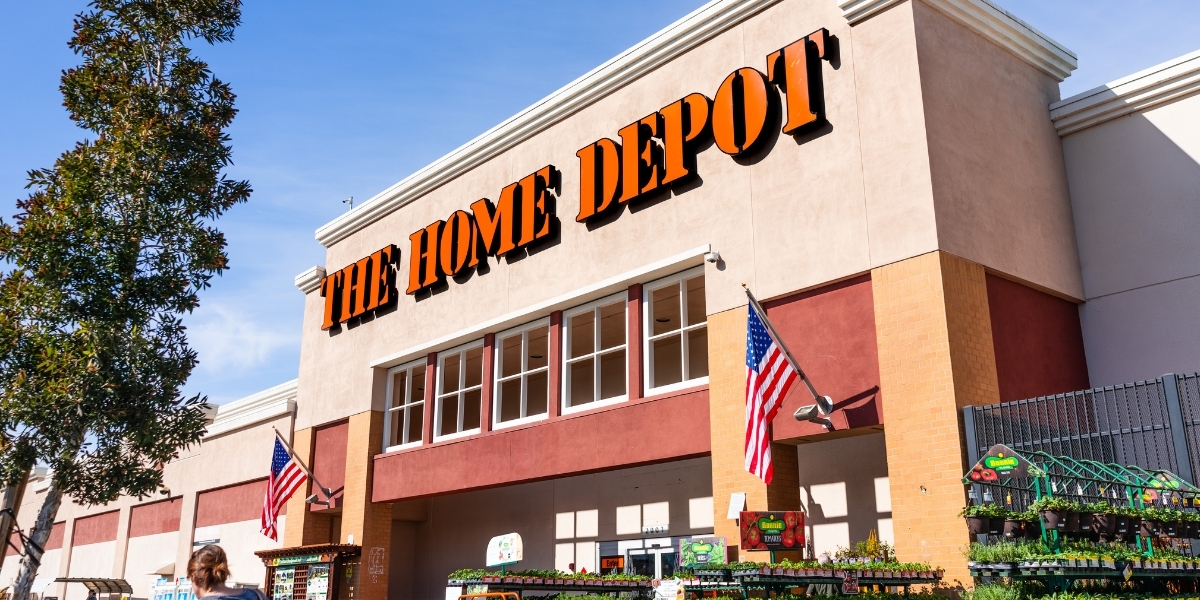
Home Depot launched an online portal “Designed with Millennials in Mind” to help first-time homeowners fix or reimagine their homes.
The portal features DIY guides and free virtual workshops that provide step-by-step guidance on projects as well as lessons on the fundamentals of caring for different areas of the home, from HVAC and plumbing to seasonal maintenance. Livestream and on-demand options are available.
According to a survey of recent homeowners or potential homebuyers in the millennial age range (25 to 40 years old) commissioned by Home Depot:
- Around half (53%) worry about purchasing their first home, about the same stress level as starting a family (57%) and career advancement (52%).
- Home maintenance (74%) and home improvement projects (68%) are the most stressful aspects of homeownership.
- Most (70%) would turn to YouTube or other online videos to learn how to tackle DIY projects versus 54% learning from a parent, family member, or friend.
In February 2022, Lowe’s likewise cited rising homeownership levels among millennials in launching DIY-U by Lowe’s, which initially included limited-seat monthly livestreams but has evolved into a series of on-demand videos covering projects and common repair and maintenance needs. The program also includes in-store workshops at select locations.
In-store and virtual workshops are often cited as prime examples of the retail trend toward experiential retailing.
Among other retailers, Apple is best known for its free in-store workshops, although it offers virtual classes as well. Sephora holds free online classes offering a range of beauty tips, and REI provides in-store workshops teaching the basics of camping and hiking, largely for free. Michaels offers a wide range of crafts classes online and in-store, also mostly for free, while Joann charges a small fee for digital sewing and quilting classes.
Williams Sonoma is well-known for its in-store and virtual cooking classes that often include acclaimed chefs. In comparison, Publix ceased operations of its in-store Aprons Cooking Schools in late July while continuing online classes. Publix said at the time, “Over the past several years, our customers’ needs have evolved. They’re learning to cook through online classes.”
BrainTrust

David Naumann
Marketing Strategy Lead - Retail, Travel & Distribution, Verizon

Ken Morris
Managing Partner Cambridge Retail Advisors

Nicola Kinsella
SVP Global Marketing, Fluent Commerce
Discussion Questions
DISCUSSION QUESTIONS: How much appeal will Home Depot’s live online workshops and DIY guides likely offer to new homeowners? Is the future of retail workshops in-store, livestreaming, or on-demand?
Poll
 Loading …
Moving home is a major driver of DIY spend. One of the current factors slowing the market is the relative lack of housing transactions. Another longer-term issue is the lack of improvement skills and knowledge among the younger generation. Home Depot’s hub for first time homeowners is a smart way to try and address both of these issues. It should also help to create some loyalty around the Home Depot brand, especially among consumers who may not have actively used it before.
Providing customers with well-produced, useful content on how to use their products makes sense, just as retailers in other categories do. Recall, Home Depot used to offer in-store classes on home repair in the past, so this initiative is merely a more contemporary approach to a old, good idea. And while creating online workshops and DIY guides makes good sense, there’s nothing really new here, and since there is already so much content available on YouTube and other platforms, I’m not sure new homeowners will flock to Home Depot’s content. That said, it’s still worth the effort.
Though not in the YouTube generation, the first place I go for my DIY challenges is YouTube search. I often look at three or four presentations to determine which is best for me. My Gen-X son and son-in-law are avid DIYers and avid users of YouTube videos.
One doesn’t have to be a new homeowner to appreciate online help and instruction. Being a homeowner means forever opportunities to change, repair, or upgrade the significant and minor forever.
The Home Depot effort makes sense. I imagine included in the instruction will be all the supplies and tools needed, and they will make them easy to package from Home Depot, of course.
The Home Depot and Lowe’s have offered instructional videos for years and I have personally benefited from them. Expanding on the DIY instructional options is a smart move by The Home Depot and providing it in the environment or streaming option customers want will appeal to a variety of consumer groups. When consumers find great tips from a retailer’s instructional class or video, they may feel more committed to purchasing their tools and building materials from that retailer.
New Millennial homeowners should love Home Depot’s virtual workshops. Same with Lowe’s DIY-U. I believe the best approach is a combination of all techniques together. It’s crucial for retailers, especially those with brick-and-mortar stores, to offer a blend of in-store experiences and online educational resources. In-store workshops provide a hands-on approach to learning, which is key to understanding how to handle home improvement projects. They also offer an opportunity for customers to ask questions and get immediate feedback. In other words, fewer hammered thumbs! And let’s not forget the buying spree for their current projects before they leave the store.
On the other hand, online resources like educational videos and webinars offer flexibility and convenience. They can be accessed anytime, anywhere, making them a perfect fit for busy first-time homeowners. So, offer education via all channels and hope these first-time home buyers will tune in.
As for me, I like finding a video that can be replayed during complex scenarios much like one does with recipes. Backing up in-store or online classes with a video on the same topic reinforces the lesson.
The form factor is especially appropriate now, as you can take your phone with you as you shimmy under the sink or up in the attic – step by step visual guidance just as you need it, right where you need it. Not so much with a laptop…
It’s pretty incredible how much information, knowledge and guidance is just sitting there on YouTube, waiting to be tapped into. Answering the age old question of “How…” is an incredible service. Retailers and professionals of all sorts have an enormous opportunity to expand their reach and build their brand with YouTube.
There’s a variety of youtube’s out there for virtually any home project/repair imaginable. I think Home Depot needs to go a little further and 1. Certify that the solution has the seal of approval of Home Depot experts, and 2. provide a “purchase” button that automatically loads a shopping cart with all the items required to complete the repair/project. With those additions they have a differentiated and very helpful approach.
Anything that is unplanned maintenance will definitely do better in an on demand digital format. When you need the information, you need it now.
For bigger planned/future projects – think kitchen or bathroom projects – in-store workshops may have appeal too – as long as they emphasize the differentiated value, like being able to touch and feel texture of surfaces, interact with other components. I’m not sold on livestreaming – unless maybe it’s interactive classroom style.
As several have intimated, there is a video answer to almost any question anyone can come up with. I simply type “How do I…?” Latest experience was “How do I remove an 8ft bathroom wall mirror by myself?” Video answer was to cover it with a sticky film called Carpet Protector and then break it into pieces with a hammer. Went to HD, got the stuff, followed the video and 20 minutes later job done. I think YouTube will have more easily accessible solutions than HD or Lowes.
Sounds like seven years bad luck in store for you, Ian …at least! I’d have looked for another video. 🙂
This is a great content marketing strategy. Why not live-stream it and have the recordings available for any and all customers (or potential customers) to view and learn. Great content that adds value is a perfect way to gain and retain customers. The more you give, the more you get!
I think there will be some demand – how could there not be ? – the fact that Home Depot might be perceived as self-promoting notwithstanding. (Streamed or video content I would personally find attractive, as it doesn’t involve actually going to a HD, something that I usually find to be a rather depressing experience.)
This is also an excellent example of the advantages of size: they can marshal an army of celebrities and experts and create a whole library of online presentations at essentially zero cost to the individual stores, something an independent, or even a small chain, would not be able to do.
On demand strikes me as the most practical implementation since most of the time it is a “sudden need” like repairing something that drives one to find answers, and quickly. YouTube is where I head first, as do many, so seems like if it is a dedicated Home Depot portal that there might need to be a big dose of training to get people to go there. Despite the plentiful content available, certainly seems like Home Depot should be in the mix.
I’m biased because I’m associated with a company that has pioneered shoppable videoconferencing on a company’s existing web sites and also offers livestream shopping and shoppable video (on a company’s existing website). I believe in the format and believe that there are great opportunities in the “phygital” world – the convergence of the physical and the digital. And it’s not about pulling people off the retail floor or impacting the physical experience. It’s about acknowledging that the lines are becoming more and more blurred and that all consumers, not just millennials, like convenience. It’s also about recognizing that video is an invaluable format. After all, YouTube is one of the top search engines on the planet. My “biased” recommendation is to make sure that the experience is seamlessly shoppable. Don’t make people stop watching the video to add items to “your” cart or worse, add them to a third party cart (someone else’s cart). Put the items on the screen with easy “add to cart” features that allow people to watch and shop not watch OR shop. My unbiased recommendation is to make the videos fun, real and engaging (maybe even train-wrecky), like YouTube Videos. We watch YouTube because many of the people we watch are like us and speak to us as people not as marketers.
Not every customer wants to call a Pro for every home improvement project & not every customer has the skills to DIY every project. There is something in the middle for assisted DIY, & I think this fits in well if the content produced is delivered well. Makes perfect sense to analyze the customer base & provide the right support for the right type of customer at the right time.